A battery made with the tools of a chip factory
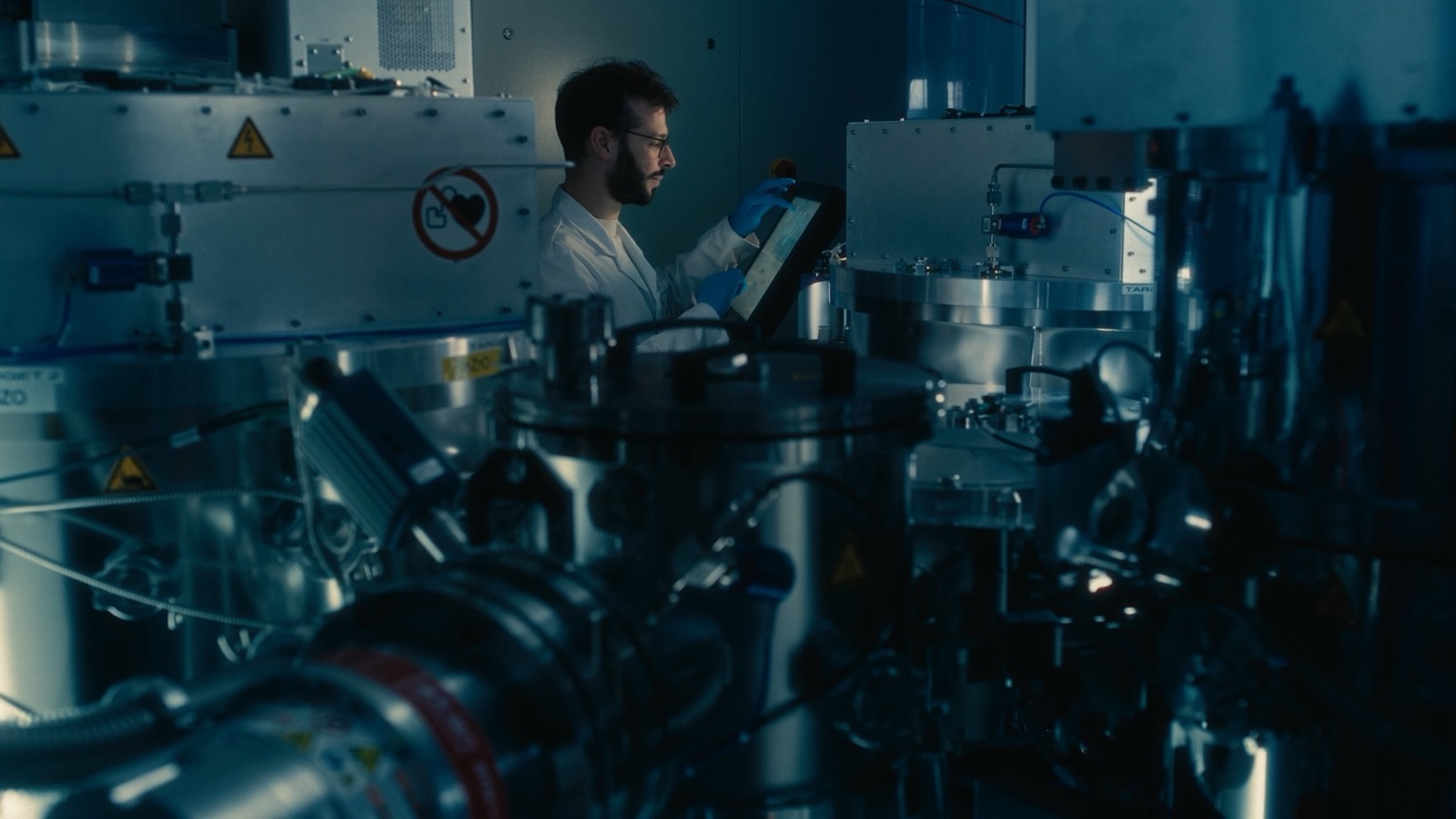
BTRY deposits every layer of a solid-state cell as a thin film on flexible metal foil. One process, one off-the-shelf production line, no liquid electrolyte.
Production simplified to its essence
Platform technology
One production technology powers very different applications, from smart labels to medical patches.
60% fewer process steps
Compared with traditional Li-ion production. No toxic solvents and little material waste.
Off-the-shelf equipment
All battery layers come off a single, proven, scalable line built on semiconductor equipment.
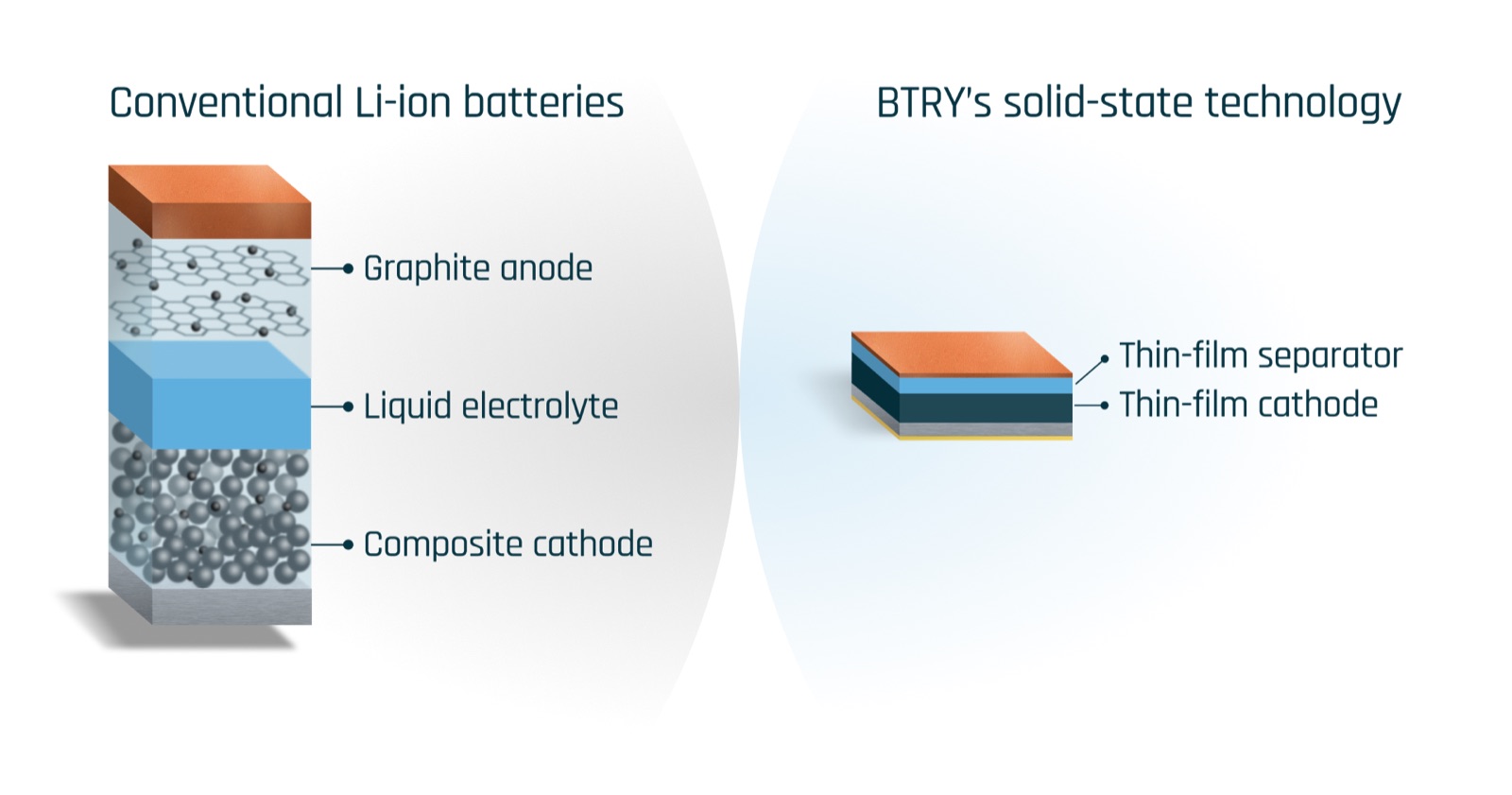
Fewer layers than a conventional cell
A conventional Li-ion cell stacks a composite cathode, a liquid electrolyte and a graphite anode. A BTRY cell replaces them with thin films on a metal foil.
What that changes
Safe operation up to 150 °C where conventional cells swell or fail. Full charge in about a minute. A cell that bends.
Talk to an engineerFrom a 1 mm lab cell to an industrial line
- 20221 mm × 3 mm proof-of-concept cells developed at Empa.
- 2023First batteries fabricated on a flexible metal foil.
- 3/2024The first 10 cm × 10 cm battery.
- 8/2024First cells made on an industrial-scale production line.
- 2025BTRY 1S4P, the first product.
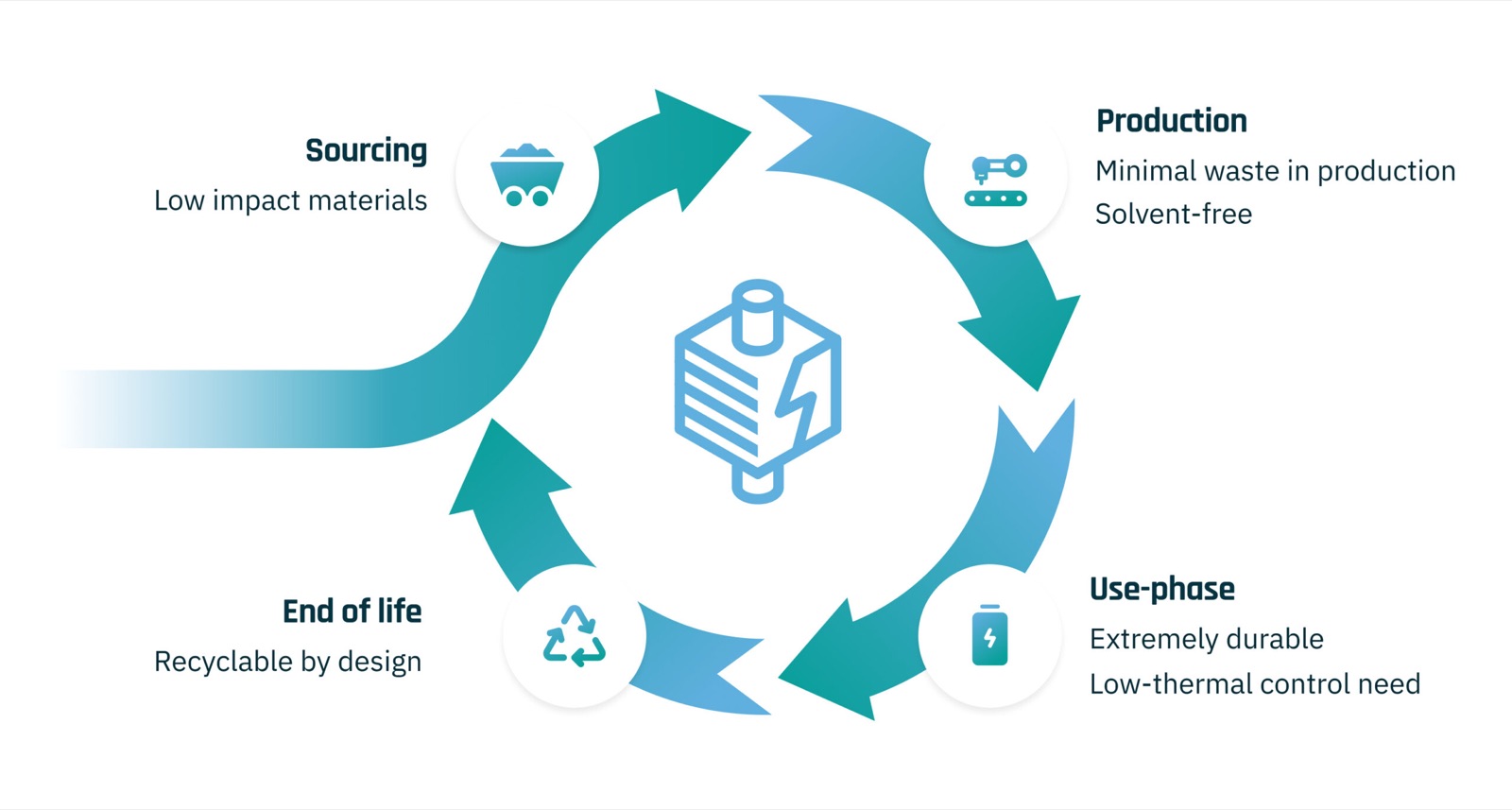
Sustainable along the whole value chain
Low-impact materials, solvent-free production with minimal waste, a durable cell that needs little thermal control, and recyclability planned from the start.
See the cell on your own bench
Request the BTRY ES spec sheet or a sample discussion with the team.
Request the spec sheet